

News & Insights
Attention Is Cheap. Participation Is the Real Metric in 2026
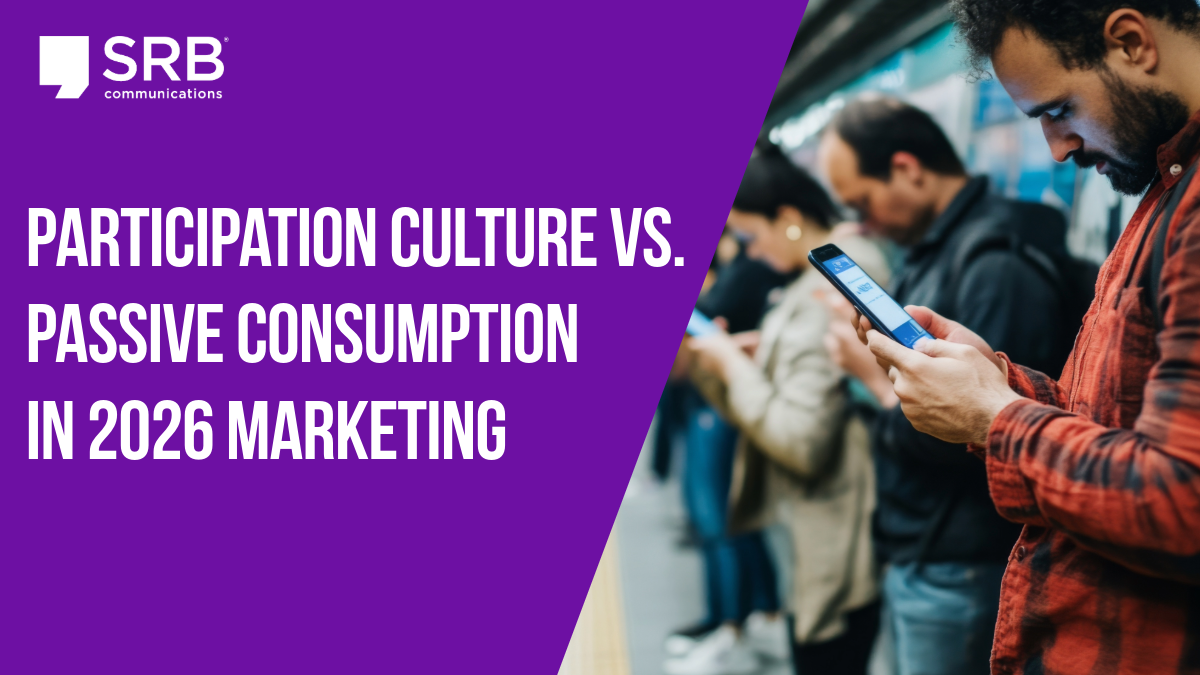
If 2025 was about optimizing content for reach, participation marketing trends 2026 are about optimizing content for involvement. Attention alone no longer signals success. Views are easy to earn and easier to forget. What matters now is whether people choose to engage, respond, contribute and return.
Audiences today are not passive consumers. They are contributors, editors, remixers and critics. And in an era shaped by AI-driven discovery, participation is not just a creative advantage. It is a visibility strategy.
Why Passive Consumption Is Losing Power
The internet is saturated. Algorithms surface more content than any person can reasonably absorb. As a result, passive consumption metrics like impressions and views have lost their meaning.
People scroll past what feels finished, overly polished or one-sided. They stop for content that invites them in.
Participation creates friction in the best way. It slows the scroll. It sparks thought. It encourages people to add their voice rather than simply observe someone else’s.
In 2026, the brands that stand out will not be the loudest. They will be the most interactive.
What Participation Marketing Really Means
Participation marketing is not about chasing comments or forcing engagement. It is about designing content with intentional entry points.
This includes:
- Inviting audiences to respond, not just react
- Creating formats that allow interpretation and remixing
- Building space for dialogue, not monologue
- Treating feedback as part of the content lifecycle
Participation transforms audiences from viewers into collaborators. When people feel involved, they invest more time, trust and attention.
The AI Reality Marketers Cannot Ignore
AI now plays a central role in how content is ranked, recommended and discovered. Engagement signals matter more than ever.
When people comment, share, remix or spend time interacting with content, algorithms interpret that as relevance. Participation feeds discoverability.
This means content designed for participation does more than engage humans. It trains systems to surface your message more often.
In short, participation is optimization.
Here’s What You Can Do Now
You do not need a full strategy overhaul to begin. Start with intention.
1. Design content that asks for something back
If your content does not invite a response, it defaults to passive.
- Ask open-ended questions
- Prompt opinions or experiences
- Encourage short, low-effort participation
If there is no invitation, there will be no interaction.
2. Build for interaction, not perfection
Highly polished content can feel closed off. Participation thrives when things feel human.
- Share thinking in progress
- Use formats that allow replies or reactions
- Let audiences witness decision-making
People engage when they feel included, not impressed.
3. Treat your audience like collaborators
Participation grows when people feel seen.
- Acknowledge contributors publicly
- Respond with intention, not automation
- Let audience input influence future content
Recognition builds loyalty.
4. Measure engagement quality, not vanity metrics
Reach without response is noise.
- Track comment depth
- Watch repeat engagement
- Measure time spent interacting
These signals show whether content resonates.
5. Ask one question before publishing
“What am I inviting my audience to do with this?”
If the answer is unclear, rethink the post.
Why This Shift Matters in 2026
Participation marketing reflects a deeper cultural shift. People no longer want to be marketed to. They want to be acknowledged.
Trust is built through dialogue, not declarations. Relevance is earned through interaction, not interruption.
The brands that win in 2026 will be the ones that stop chasing attention and start building relationships.
Because attention is cheap. Participation is earned.